

Everybody Needs a Hero (Post)

Summer Substack Cohort Registration is Open
After the response to last week’s poll, I’ve opened registration for the Summer Substack Cohort.
This is a six-week, hands-on implementation cohort where we’ll work directly on your Substack together — building your profile, About page, structure, Hero Post, Welcome Email, and Notes strategy step-by-step.
Enrollment is limited to 8 participants so everyone has time for questions and feedback. More cohorts may be opened if there is enough demand and this one fills quickly.
If you’re a paid subscriber, your discount code was sent out in an email yesterday.
Now, let’s move on to today’s article about Hero Posts

You may have heard the term “Hero Post” around on Substack. Or maybe you’ve seen someone’s large banner image at the top of their Substack looking beautiful and wondered how you create something like that.
Today, we’re going to dive into what a Hero post is, what it should do for your Substack, how to create one, and what to put into it.
The importance of the hero post, or welcome post as it’s also referred to, is relatively new on Substack. As more and more users arrive on Substack — and to your publication — via the Substack app, instead of the web, the hero post is becoming more and more important.
Your About page - which we discussed last week - is still important for the web version of Substack, but it is invisible on the app. Currently, the Substack app prioritizes your profile activity feed rather than your full publication experience. Readers see your posts and activity, but they do not encounter your publication structure in the same way they would on the web version.
This means that while the About page is important for those of us who want a publication and want to have a meaningful presence on the Substack platform, for discoverability on the app, your Hero Post is more important.

What is a Hero Post all about?
On the app, this is the main introduction to your posts. It is a pinned post on the Post feed:
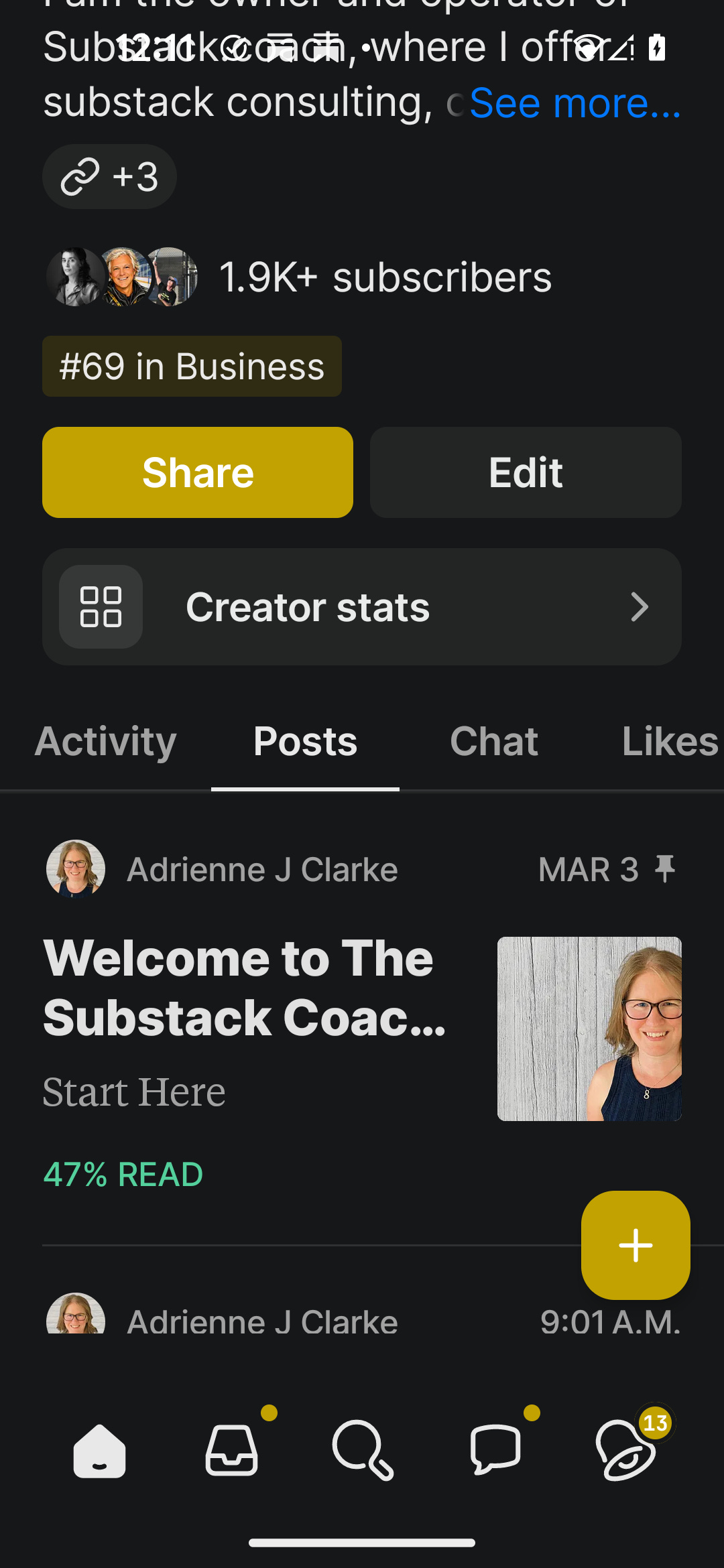
On the web version, it can also be the first post that new people come across.
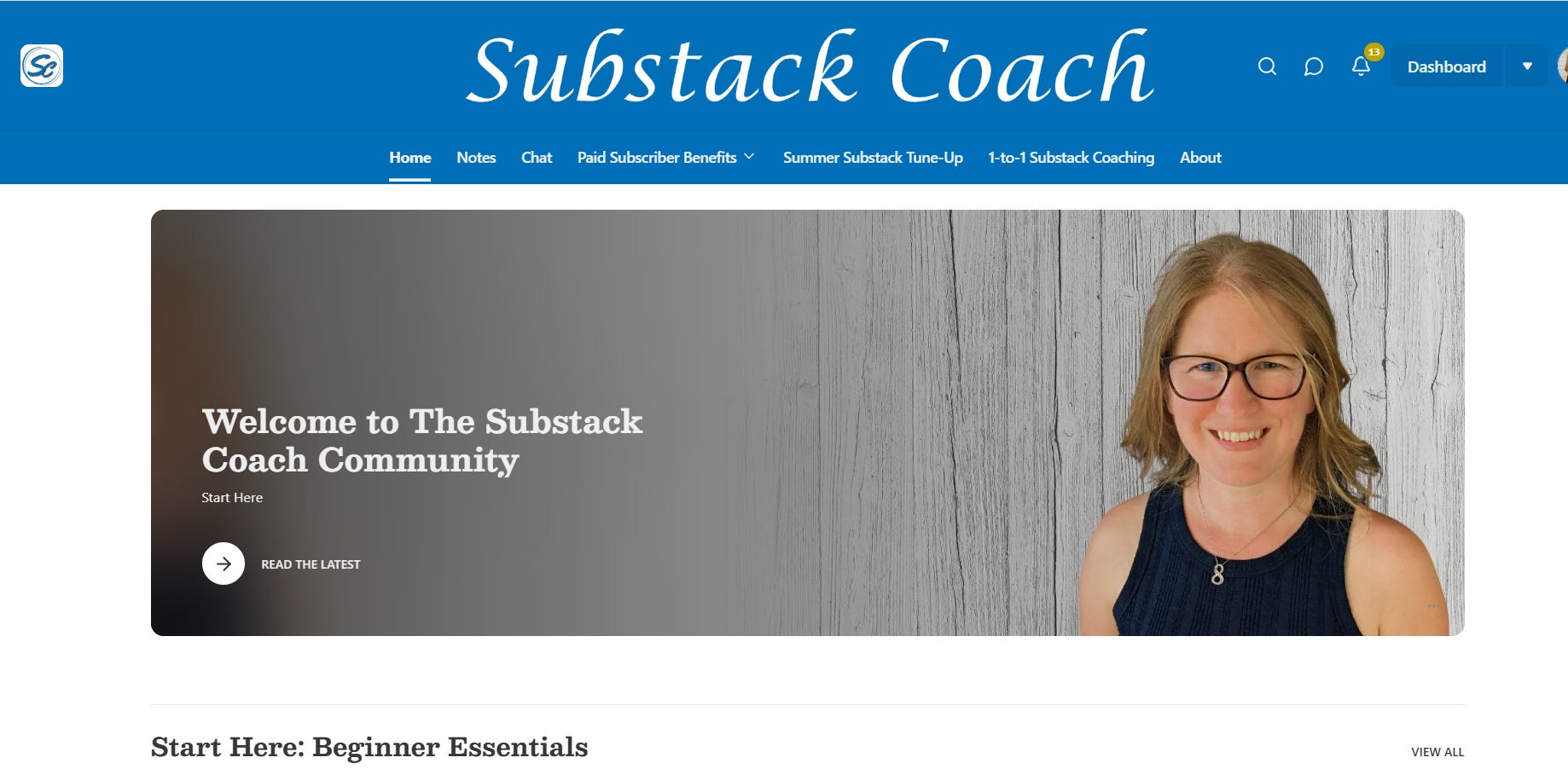
This is your introduction, regardless of how people visit your Substack publication. If we think of our profile (on the app) or our welcome page (on the web) as the front door to our home on Substack, this post becomes our entrance. We’ve invited our visitor in, and they’re wondering where to go next.
With this in mind, your Hero Post is a pinned introduction post, a reader orientation tool, a “start here” guide and/or your positioning statement, that clearly shares your point of view. Don’t use this space for random announcements, just your most recent post, or temporary updates. If you do so, you’ll need to make sure you come back in and edit frequently - a mistake I have made myself. It is much easier to sustain if this is an evergreen post that you know is always correct and always in its place.
A well-written Hero Post should answer the following questions: What is this Substack about? Who is it for? Why does it exist? What makes this perspective unique? Where should readers start? What kind of content will readers receive?
One of the most important parts of a Hero Post is your point of view.
When we discussed the About page last week, we talked about it being mostly logistical, brief, and to the point. The Hero Post gives you more room to share the deeper perspective behind your publication. This is where you can talk more openly about your story as it relates to your Substack, why this publication matters to you, what led you to create it, and what you hope readers will find here.
This is often the first substantial piece a new reader will actually sit down and read carefully.
That means this is not the place to be generic or vague.
You want to attract the people who are most likely to connect with your work, stay engaged with your ideas, and become part of your community over time, while allowing everyone else to recognize that this may not be the right fit for them. Your Hero Post does not need to repeat everything from your About page. In fact, it should not. You can always link to your About page for readers who want that additional context.
The real purpose of this post is to build trust and alignment. By the time a reader finishes it, they should understand how you think, why this work matters to you, and what they can expect emotionally or intellectually from spending time with your writing.
A great Hero Post does three very important things for your readers.
First, it creates orientation.
When someone arrives on your Substack, especially through the app, they need immediate context. They need to know where they are, what kind of publication this is, and how to begin. Without that immediate context , readers are left scrolling through your feed trying to piece things together for themselves. Some will do that. Many will simply leave.
Second, it establishes trust.
A thoughtful Hero Post signals that your publication is intentional. It shows that there is structure here, purpose behind your work, and a clear experience for readers to step into. This matters more than many creators realize. People are far more likely to subscribe when they feel confident that a publication knows what it is and who it serves.
Third, it creates a clear next step.
Your readers should never finish your Hero Post wondering what they are supposed to do next.
This is where links become essential.
A strong Hero Post should guide readers toward your most important foundational posts, your Start Here directory, your free and paid pathways, or the pieces that will help them best understand your work. Think of it as helping your readers settle in and showing them exactly where to go once they have stepped through the door.
Structurally, a Hero Post does not need to be complicated.
A simple framework often works best.
Start with a strong opening that clearly states what your publication is about and why it exists. Follow that with some context about your perspective and what makes this publication distinct. Then guide readers toward the kinds of content they will find here, how often you publish, and where they should begin. Finally, give them a natural invitation to subscribe, explore, or continue reading.
There are also a few common mistakes I see repeatedly.
The first is treating the Hero Post like an About page rewrite. While there will naturally be some overlap, these serve different purposes. The About page provides practical clarity. The Hero Post provides reader orientation and connection.
The second is making it too vague. Phrases like “thoughts on life, creativity, and everything in between” may sound poetic, but they do not help readers understand what they are actually subscribing to.
The third is forgetting to provide direction. If readers finish your Hero Post and have no obvious next step, you have missed one of its most valuable functions.
And finally, many creators pin a temporary announcement or a recent post instead of creating an evergreen introduction. This often works for a short time, but eventually creates confusion and requires constant updating.
A Hero Post is not decoration.
It is not simply a banner image at the top of your publication.
It is the moment your reader steps inside, looks around, and decides whether they want to stay.
If your About page is the back cover of the book that helps someone decide whether to pick it up, your Hero Post is the opening chapter that helps them decide whether to keep reading.
When done well, it gives readers context, clarity, and confidence.
It helps them understand not only what your publication is about, but why it matters.
And that is exactly what encourages people to subscribe, stay engaged, and become part of the larger ecosystem you are building on Substack. When readers understand where they are, why your publication exists, and where to go next, they are far more likely to stay, explore, and become part of what you are building here.
If reading this made you realize your Hero Post is missing, outdated, or simply not doing the work it should be doing, this is exactly the kind of refinement we can work through together during a Summer Substack Tune-Up session. In one focused hour, we can review your Hero Post, homepage structure, reader pathways, and overall publication experience so your readers know exactly where they are, where to begin, and why they should stay.
I'm uncertain, exactly where the Hero's post is created and lives. I have a welcome message that goes out when people subscribe and I have an about post. But where and how do I put up a Hero's post? I feel like your instructions of what it needs to look like are exceptional and I can do it if I know where to put it. Thank you.
Curious: When you write a diary type substack (e.g., mine is a weekly letter that covers what's blooming in my garden, what I got done in the garden, some sort of thought piece that always ties back to my (fiction) writing, an update on editing my novel, and finally a picture of the mug I'm using that day) where do I direct people to go when I get to the directory part of the hero post? I could certainly mention my first two posts, which were origin story posts, but the rest of my posts have been very linear. Like a weekly newscast.